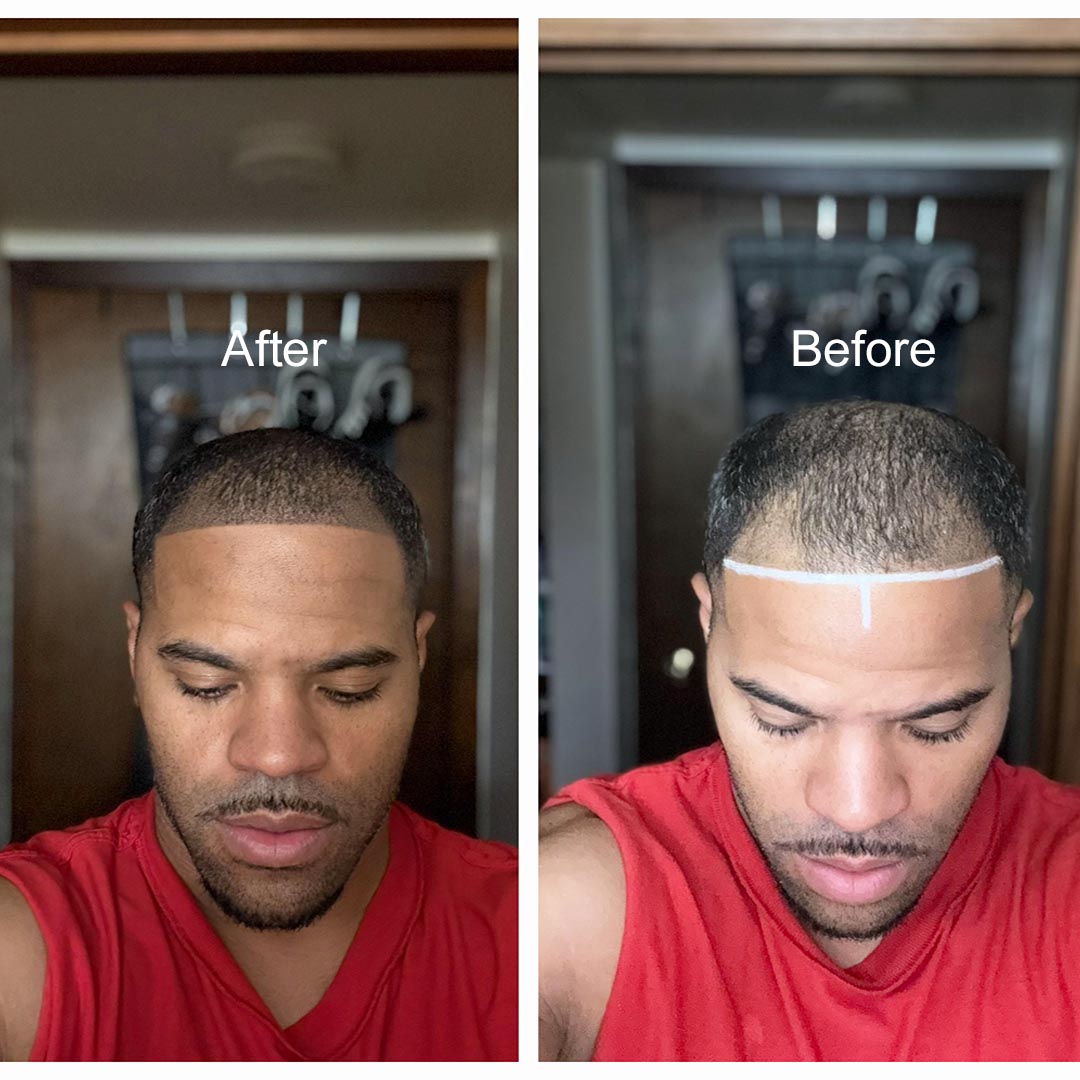
Thinning and going bald is a choice. Scalp Micro-Pigmentation (SMP) will give you a fresh new look. I Guarantee It!
Schedule an Free consultation today.

We accept these major credit card payment.
Finance is Available!
What is (SMP)? Scalp micro- pigmentation
Scalp micropigmentation (SMP) is a non‑surgical cosmetic procedure in which tiny deposits of pigment are placed in the upper layers of the scalp skin to mimic the look of natural hair follicles and add the appearance of density or a shaved head. It is typically done over multiple sessions and, when properly performed and cared for, can provide long‑lasting, natural‑looking coverage for various types of hair loss.
What scalp micropigmentation is?
Scalp micropigmentation uses specialized microneedles to implant pigment at shallow depth (around 0.5 mm) in the scalp epidermis to create small dots that resemble hair follicles.
It can be used to recreate a shaved “buzz cut” look, camouflage thinning or diffuse hair, blend scars (for example after hair transplant), or reduce contrast on visible scalp.
Results are considered semi‑permanent: pigments gradually lighten over years and may need touch‑up sessions to maintain color and density.
Indications and suitability
Common candidates include men and women with pattern baldness, thinning hair, alopecia, or visible scars on the scalp.
People prone to keloid scarring, with active scalp infections, uncontrolled skin disease, or known pigment allergies are usually poor candidates and may be advised to avoid SMP.
Safety and appearance depend heavily on using a trained, licensed provider who understands hairline design, pigment selection, and sterile technique.
Procedure steps
Consultation and planning
The process starts with an initial consultation to review medical history, examine hair loss pattern and scalp condition, discuss expectations, and design a hairline or density plan.
The practitioner chooses pigment color to match skin tone and existing hair, and estimates how many sessions (often two to three) and hours per session will be needed.
Preparation
Before treatment, the scalp is cleaned thoroughly; existing hair is usually cut short or trimmed for even pigment placement.
Clinics may recommend avoiding blood‑thinning agents such as aspirin or fish oil for about a week (unless medically necessary), and avoiding tanning or sunburn of the scalp.Treatment sessions
During each session, the practitioner uses a SMP device or tattoo‑like machine with micro‑needles to place many tiny pigment deposits in patterns that match natural hair direction and density.
Sessions often last several hours; the first builds basic coverage, and later sessions refine the hairline, add density, and correct any uneven fading. Most patients need 2–3 sessions spaced by 1–3 weeks.
Immediately after
Mild redness, swelling, and tenderness of the scalp for a few days are common and usually self‑limited.
A fine scab forms over each microdot; these scabs typically flake off over 5–10 days as the skin heals.
Risks, side effects, and limitations
Local reactions and complications
Possible side effects include redness, itching, irritation, tenderness, mild bruising, and temporary swelling soon after treatment.
There is a risk of infection if needles or environment are not properly sterilized, and very rarely scarring or keloid formation, especially in people with that tendency.
Pigment‑related issues
Some individuals can develop allergic reactions to pigments, so many providers perform a patch test to check for sensitivity.
Over time, pigments may fade or shift in tone due to UV exposure, skin chemistry, and products used, leading to lightening or color change that may require touch‑up.
Aesthetic limitations
Poorly performed SMP can look blotchy, too dark, or unnatural, especially if dots are too large, too deep, or mis‑aligned with natural hair patterns.
SMP does not create real hair or texture, so style options are limited; most clients maintain a closely shaved or very short hairstyle for the most realistic effect.
Aftercare and recovery
First 4–5 days
The scalp should be treated like a healing wound: avoid washing the scalp directly, heavy sweating, swimming, saunas, steam rooms, and tanning beds.
Patients are usually advised not to pick or scratch scabs, to minimize infection and pigment loss, and to keep the area clean and dry.
Days 5–10
Light rinsing or washing with mild, non‑exfoliating shampoo in lukewarm water is typically allowed after about 4–5 days.
Gentle shaving with electric clippers may be possible after several days, while wet shaving with a razor is often delayed until around 10 days.
Longer‑term care
After about 10 days, most people return to normal routines, but avoiding intense sun exposure and using sunscreen on the scalp is emphasized to prolong pigment life.
No hair dye is usually recommended for about 3 weeks, and moisturizers are encouraged once scabs have fallen to support skin health and appearance.