
Last Updated: November 19, 2026
Quick Summary
Yes, SMP turn blue over time when pigment is placed too deep, cheap ink breaks down, or UV damage accumulates. Blue or green results are almost always technical and preventable. Choosing carbon-based pigment, correct depth, undertone matching and daily scalp sunscreen protects your results.
- Pigment must sit shallow and even in the upper dermis layer to avoid a blue cast.
- Ask your artist for carbon-based pigment with named brands and a batch number.
- Daily sunscreen on the scalp is the key step against premature blue or gray.
- Touch-up sessions every few years keep the five-year look even, not thinned out.
- Mild cool tone suits color correction; heavy blue or green cast often needs laser removal.
Table of Contents
- Why Scalp Micropigmentation Turns Blue: 7 Causes You Need to Know
- 1. Pigment Chemistry: Carbon-Based Ink and Heavy Metal Content
- 2. Implantation Depth and the Dermis Layer
- 3. Sun Exposure and Ultraviolet Damage
- 4. Color Theory: Warm vs Cool Undertones and Skin Tone Correlation
- 5. Pigment Migration and Tattoo Blowout
- 6. The Healing Process and Epidermal Turnover
- 7. Fading Process and Pigment Concentration
- Scalp Micropigmentation After 5 Years: What Long-Term Results Really Look Like
- How to Prevent SMP Color Change: Practical Steps Before and After Treatment
- SMP Correction for Blue Pigment: Laser Removal vs Color Correction
- Pre-Qualify for SMP: What to Ask Before You Commit
- Frequently Asked Questions
Why Scalp Micropigmentation Turns Blue: 7 Causes You Need to Know
Does scalp micropigmentation turn blue over time? Yes, it can. The cause is almost always a technical one: pigment placed too deep, ink that breaks down, or sun damage.
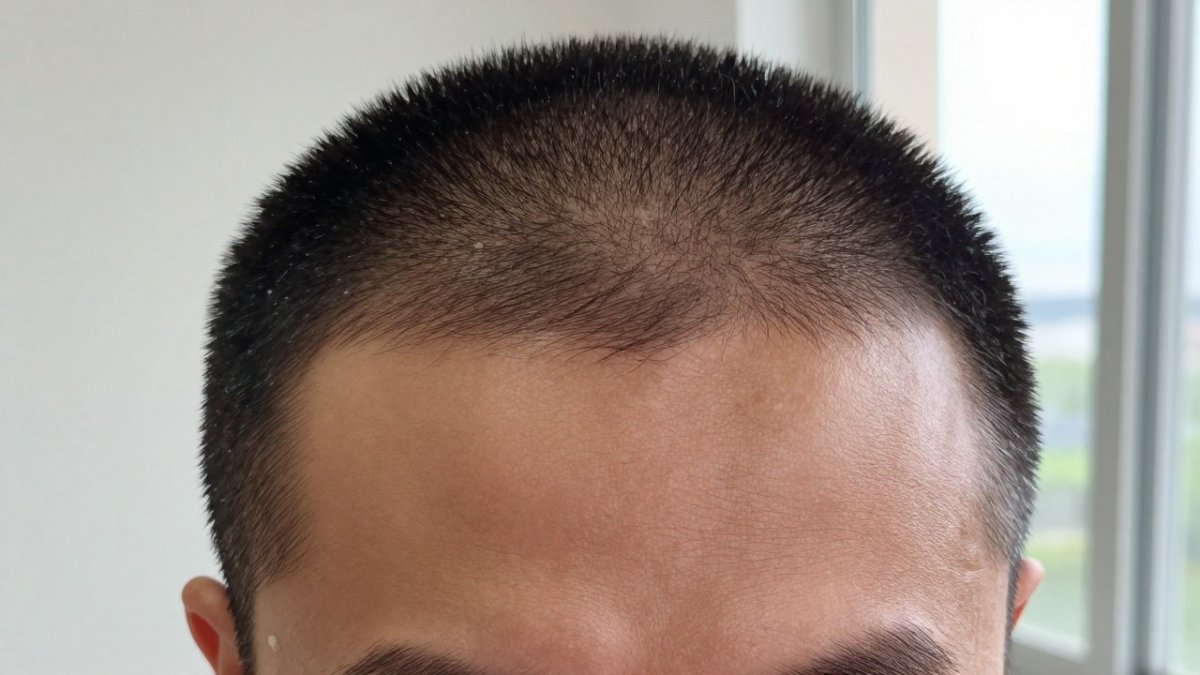
Below, we’ll show you exactly why SMP turn blue and how each cause can be avoided.
SMP is a form of cosmetic tattooing that places pigment into the upper dermis to mimic hair follicles.
1. Pigment Chemistry: Carbon-Based Ink and Heavy Metal Content
Carbon-based pigment is the standard for SMP. Cheap inks can carry heavy metal content, and those metals shift color as they break down. Ask any artist what ink they use, and ask why.
2. Implantation Depth and the Dermis Layer
Pigment must sit in the upper dermis layer, shallow and even. Too deep, and the ink spreads in the scalp tissue. That spread is what creates a blue cast. Depth control is a skill, not a setting on a machine.
3. Sun Exposure and Ultraviolet Damage
Ultraviolet exposure breaks down pigment particles over time. It also speeds the fading process and can push color toward blue or gray. Daily sunscreen protection on the scalp is not optional if you want long-term results.
4. Color Theory: Warm vs Cool Undertones and Skin Tone Correlation
Color matching starts with undertones. A cool pigment on warm skin, or the reverse, can read wrong as it ages. Assessing undertones before treatment is a sensible step to ask about.
5. Pigment Migration and Tattoo Blowout
Pigment migration happens when ink travels beyond the intended point. Tattoo blowout is the visible result: a blurred, spreading edge. On the scalp, blowout often looks blue because scattered particles sit deeper than planned.
6. The Healing Process and Epidermal Turnover
Epidermal turnover pushes surface pigment out during healing. What remains is the settled layer. If too much pigment was packed in, the settled result can look oversaturated and cool-toned once the healing process finishes.
7. Fading Process and Pigment Concentration
Pigment concentration decides how gracefully SMP ages. High concentration fades slower but can shift cooler. Lower concentration fades faster and may need touch-up sessions sooner. There is a balance, and a good artist finds it.
| Cause | What Goes Wrong | How to Avoid It |
|---|---|---|
| Pigment chemistry | Heavy metal content shifts color | Ask for carbon-based pigment and brand names |
| Implantation depth | Ink sits too deep, spreads blue | Choose an artist with documented depth control |
| Sun exposure | UV breaks down pigment | Daily sunscreen on the scalp |
| Color theory | Wrong undertone match | Undertone test before first session |
| Pigment migration | Blowout blurs the hairline | Shallow, even application |
| Healing process | Oversaturation after turnover | Moderate pigment load |
| Pigment concentration | Fast fade or cool shift | Balanced dilution per session |
Scalp Micropigmentation After 5 Years: What Long-Term Results Really Look Like
Scalp micropigmentation can look softer over time rather than blue when it is done correctly. Pigment particles break down slowly, and some fading is normal.
What most guides miss is that maintenance, not the initial session, decides the five-year look. Plan for touch-up sessions every few years. Skip them, and the result thins out unevenly.
How to Prevent SMP Color Change: Practical Steps Before and After Treatment
Prevention starts before the first session and continues for the life of the pigment. Many color shifts relate to decisions made during healing and in the months that follow. Here is the checklist we would use, with the reasoning behind each step.
Before treatment:
- Confirm the artist uses carbon-based pigment with named brands. Ask to see the pigment label and look for a batch number. Carbon-based inks are standard, but cheap formulations can contain heavy metals that shift color as they break down.
- Ask how they control implantation depth. The pigment must sit in the upper dermis, shallow and even. Too deep, and the ink spreads in the scalp tissue, creating a blue cast. Depth control is a skill, not a setting on a machine.
- Request an undertone and skin tone assessment. A cool pigment on warm skin, or the reverse, reads wrong as it ages. Skilled artists adjust for warm vs cool undertones before the first needle touches the scalp.
- Discuss pigment concentration and dilution. High concentration fades slower but can shift cooler. Lower concentration fades faster and may need touch-up sessions sooner. There is a balance, and a good artist finds it.
After treatment:
- Wear sunscreen on the scalp daily after healing. Ultraviolet exposure breaks down pigment particles over time and can push color toward blue or gray. Physical sunscreens are a common choice for sensitive skin; ask your provider which products they recommend.
- Book touch-up sessions on schedule. Touch-up sessions are commonly part of maintaining SMP results, and timing should be discussed during consultation.
- Avoid harsh exfoliation on treated areas. Aggressive scrubs or chemical peels can disrupt the settled pigment layer and accelerate fading.
- Report any color shift early. A slight cool tone caught in the first few months is easier to correct than a fully developed blue cast.
Watch out: skipping the post-healing sunscreen step is the single most common reason SMP turns blue or gray prematurely. UV damage is cumulative and irreversible once pigment particles break down.
If you are ready to move forward, you can request a personalized SMP quote before you commit.
SMP Correction for Blue Pigment: Laser Removal vs Color Correction
Two routes exist for blue or discolored SMP: laser removal and color correction. Here is a general decision matrix to help frame the choice.
Laser removal is one option that lifts old pigment, typically over multiple sessions, and is often considered for heavy discoloration or widespread blowout.
Color correction involves layering warm pigment over blue tones to neutralize them. Results depend on precise matching, and correction does not remove the original pigment.
Use this matrix to decide:
| Situation | Recommended Route | Why |
|---|---|---|
| Heavy, widespread blue or green cast | Laser removal | Correction cannot reliably neutralize large areas of deep pigment |
| Mild cool tone in a localized area | Color correction | Faster, less invasive, and preserves existing work |
| Unknown or suspect pigment chemistry | Laser removal | Removes the risk of further color shift from unstable ink |
| Client wants a fast fix with minimal sessions | Color correction | Typically fewer sessions than full removal |
| Client wants a completely fresh start | Laser removal | Full clearance before new pigment |
Pricing for either route depends on the individual case, so ask for a quote before you choose. You can find current information on scalp micropigmentation cost.
Pre-Qualify for SMP: What to Ask Before You Commit
Before you commit, ask three things: what pigment is used, how depth is controlled, and what maintenance looks like. A professional assessment should answer all three in plain language.
You can pre-qualify for SMP to check whether you are a good candidate. If you are still deciding, read our step-by-step guide on how to book an SMP consultation. And if a natural hairline matters to you, our guide on getting a natural-looking hairline shows how skin tone shapes the result.
Blue or green SMP is a technical failure, not a fact of life. At Digital Barbershop, our Master Barber and SMP Artist Sylvester W. Jr. assesses pigment, depth, and undertone before treatment, and our pre-qualification process sets clear expectations from day one.
Frequently Asked Questions
Does scalp micropigmentation turn blue over time?
It can, but it is not inevitable. Blue or green discoloration usually results from pigment placed too deep in the dermis, low-quality carbon-based ink, or prolonged ultraviolet exposure. With careful application, SMP typically fades gradually toward a lighter version of the original shade rather than shifting to blue. Regular sunscreen protection and touch-up sessions help maintain a natural look.
What happens to scalp micropigmentation after 5 years?
After several years, SMP pigment commonly softens and lightens as the fading process continues. Touch-up sessions may be needed to restore density and sharpness. If the original application was too deep or used unstable pigment, you may notice a blue or green tint instead of a clean fade. A consultation can assess whether a simple refresh or SMP correction for blue pigment is the right next step.
Can poorly applied or faded SMP be corrected?
Yes. Correction of blue-toned pigment is a topic to discuss during consultation, as options depend on the pigment’s depth and extent of discoloration.
How do I prevent SMP color change from sun exposure?
Apply broad-spectrum sunscreen to your scalp daily once healing is complete, wear a hat during peak UV hours, and avoid tanning beds. Ultraviolet exposure breaks down pigment particles and accelerates fading, which can push the color toward blue or green. Consistent sunscreen protection and scheduled touch-up sessions are the two most effective habits for preserving long-term results.

Leave a Reply