
Quick Summary
Choose SMP pigment by starting with your natural hair colour and scalp tone rather than a colour chart, because the pigment sits in the scalp. Use a step-by-step selection process, plan for fading and lightening over time, and book a pre-qualification assessment before your first session.
- Your natural hair colour is the first reference point for choosing a shade.
- Scalp tone matters as much as hair colour, since the pigment sits in the scalp.
- Work through the selection steps in order and record each answer.
- Plan for pigment fading and lightening over time before the first session.
- Request a pre-qualification and pigment assessment before booking treatment.
Table of Contents
- Start With Your Hair Colour and Scalp Tone
- A Step-by-Step Pigment Selection Process
- Planning for Fading, Lightening and Long-Term Colour
- Booking Your Pre-Qualification and Pigment Assessment
- Frequently Asked Questions
Start With Your Hair Colour and Scalp Tone
Last Updated: November 21, 2026
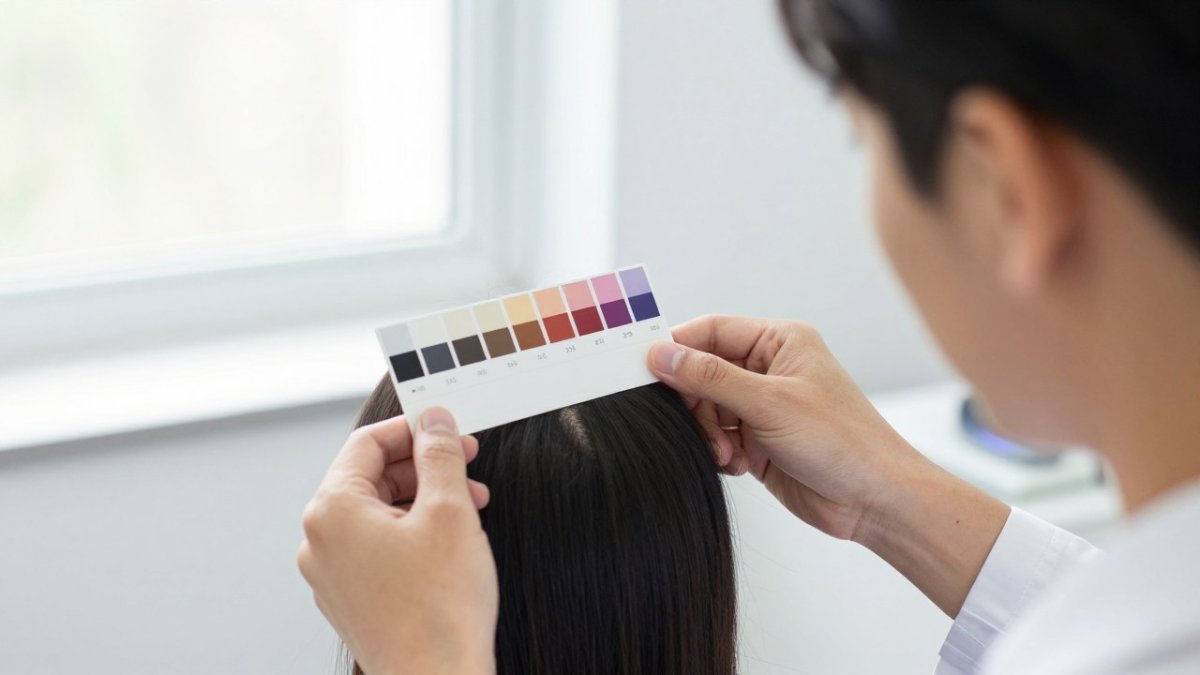
This guide explains how to choose SMP pigment for a natural result that holds up over time. The right shade starts with hair colour and scalp tone, not the colour chart.
Your natural hair colour is the first reference point.
Scalp tone matters just as much. Two people with the same hair colour can have very different scalp tones, and the scalp is where the pigment sits.
!Close-up of a technician in a bright clinic holding a shade card against a client’s scalp under natural daylight
A Step-by-Step Pigment Selection Process
Most guides list factors but never turn them into a repeatable workflow. Use this sequence in order, recording each answer so the next session starts from data rather than memory.
Planning for Fading, Lightening and Long-Term Colour
Pigment does not stay exactly as it heals, and planning for changes over time before the first session helps a result age well (Medical Tattooing).
Booking Your Pre-Qualification and Pigment Assessment
Start by requesting your pre-qualification through the Digital Barbershop quote form.
Ready to take the next step? Pre-Qualify with Digital Barbershop to begin your personalised assessment, or request a quote to talk through your options.
Frequently Asked Questions
What is the best ink for SMP?
There is no single best ink for every client. The right pigment is one formulated for scalp micropigmentation, from a supplier that provides clear documentation on its composition, dilution and intended use. Look for consistent batch quality, stable colour in healed test areas, and a shade range that lets the practitioner match hair and scalp tone rather than forcing one colour. Ask providers which pigment they use and how they verify it before treatment begins. Request a quote through the Digital Barbershop website for current details.
Should SMP pigment match your hair colour or your skin tone?
Both matter, but they serve different purposes. Matching hair colour helps the scalp read as natural alongside existing hair, while skin and scalp undertone determine how the pigment will sit and how it will shift as it heals. Pigment that looks right on a dry, freshly tattooed scalp can look different once healed. A conservative shade, often one tone lighter than your hair, is a common starting point, and the final choice should be confirmed on your own scalp under natural light.
How do you choose between black and dark brown SMP pigment?
Black pigment usually suits clients with very dark hair and a cool or neutral scalp, while dark brown often blends better with brown hair and warmer skin tones. Black can appear blue or grey-tinged as it ages, so it is not always the safer choice for lighter hair or thinner density. Dark brown gives a softer finish but may look lighter sooner. Your practitioner should test both on a small area and assess them against your hair, scalp and hairline before deciding.

Leave a Reply